

Lean Platforms
Ditch Software Development Backlogs by Thinking in Releases
This article is part of our series on Lean Platforms, soon featuring as a chapter in our up and coming free, downloadable eBook
Every software change, whether it’s a bug fix, a new feature, or a performance improvement, should deliver value. The typical approach is to prioritize features by cost and impact, throw them all into a backlog, and cherry-pick what you can into the next release.
The result? Bloated backlogs and a never-ending game of triage. Technical debt accumulates. Stakeholders grow frustrated when critical needs are lost in the shuffle. The problem isn’t the work itself; it’s how we manage the work.
In this article, we’ll offer a better approach that we can see work when organizations follow the Lean Platforms mindset.; ditch the backlog, plan deliberately, and ship predictably by anchoring every change to a release, setting priorities and escalating changes that get left behind. We’ll also look at how BuildMaster provides the automation and visibility to stay aligned, helping teams plan with confidence and deliver software with real rhythm.
The Current World of Software Change Management
Software teams are under constant pressure to deliver value fast. Changes that matter most to stakeholders are typically either fixing critical issues that threaten revenue or building new features that grow it, or have another system of estimated value. But every change also comes with its cost: time, effort, and resources. Teams balance value against cost, shaping release plans around what seems most urgent or impactful.
Most organizations follow a single-track release model:
- Frequent minor releases for small, incremental changes
- Occasional major releases for big-ticket features or architectural shifts
While a product roadmap gives long-term direction, day-to-day development is usually focused on what’s “now” or “next.” Devs operate in short, sprint-like cycles that create an assembly-line dynamic: a developer finishes a feature, hands it off for testing or deployment, then jumps straight into the next task. It feels efficient …but only on the surface.
Problems start to pop up quickly. Testing and deployment often lag behind development, causing bottlenecks. Inflexible release plans leave little room for unexpected changes or long-term initiatives. And anything that doesn’t fit neatly into the current sprint or release window? It gets pushed to the backlog. Over time, you’ll end up with missed opportunities, mounting technical debt, and an ever-growing mountain of unfinished work.
Why Backlogs Become Unmanageable
Backlogs start off making sense, but over time grow into an endless to-do list where features, fixes, and minor tweaks pile up with no clear path to delivery. Small changes like a UI adjustment or a copy tweak get buried beneath higher-priority issues. It becomes all too easy to end up working on the wrong things at the wrong time, like tweaking a login screen while a critical data export feature is still broken.
Worse, valuable ideas get lost or abandoned entirely. Employees notice that their suggestions disappear into the backlog void and start feeling like there’s no point in suggesting anything. Developers, meanwhile, are stuck constantly re-prioritizing, trying to figure out what should be done next. It’s overwhelming and leads to unmet expectations.
To cope, teams fall into anti-patterns. They reject anything that seems low-value. They let old items quietly expire. They block new requests entirely just to keep their heads above water. What you get is a reactive system full of churn and missed opportunities.
But the fact is a backlog doesn’t have to define your delivery process. Instead of managing an ever-growing list of tasks—you need to rethink how changes are planned and delivered by anchoring every task to a clear release schedule with a defined commitment. It’s not about doing more, it’s about planning smarter to restore predictability, build stakeholder trust, and bring clarity back to your software process.
Ditch the Backlog, Target Releases
Instead of letting tasks pile up in a never-ending backlog, start planning changes deliberately. Treat every proposed change, whether it’s a major feature or a minor fix, as a decision, not a placeholder. This gets rid of the limbo and makes sure that everything is decided up front. Every change has a release, every release has a deadline. Teams know exactly what they’re aiming to ship, and when.
All this will only work if everyone, from developers to stakeholders. embraces this shift in mindset. This means moving away from fuzzy labels like “high,” “medium,” or “low” priority and adopting commitment-based terms that are tied to actual release behavior:
⏰ Scheduled: “We will ship this release.”
⛔ Blocker: “We cannot ship without this.”
💡 Planned: “We plan to ship this release.”
🎯 Targeted: “We’ll try to ship this release.”
This language isn’t just semantics. It’s intentional terms to build collaboration and clarity. It transforms vague requests into trackable, actionable changes that are more transparent, more deliberate, and ultimately, more predictable. This approach involves following a simple four-step plan:
✅ Step 1: Establish Routine Releases
As we covered in our [releases] article, set a routine—weekly, bi-weekly, or monthly—and ship on a fixed schedule, regardless of what’s included. This prioritizes predictability over packing in specific features and appears much like the minor releases of a single-track release model. The goal isn’t to pack in as much as possible, it’s to maintain momentum and reduce bottlenecks. Routine releases create a rhythm and give your team a clear process to slot any changes into.
✅ Step 2: Target a Release
Every time a new change is proposed, assign it to a specific release. Use a rough effort estimate to place it appropriately: a small bug fix might land in next week’s release, while a new feature could be scheduled a few cycles out. This step is all about mindset. You’re moving from “someday” to “this is when it ships.” Every change gets a release, no exceptions.
✅ Step 3: Set a Priority
Every change needs to have a clear priority set within that release. Is it critical or just nice to have? Use four simple commitment levels:
- Blocker: “This must ship. No exceptions.”
- Scheduled: “We will ship this in the next release.”
- Planned: “We plan to ship this in an upcoming release.”
- Targeted: “We’ll try to get this into the release, but no promises.”
These aren’t just labels, they’re shared agreements that guide how the team works and communicates.
✅ Step 4: Auto-Escalate
This system allows low-priority changes to automatically escalate in importance over time. As releases come and go, a previously “Targeted” change may get pushed up to “Planned”, then “Scheduled” and eventually to “Blocker”. This forces a decision: do you finally ship this, or cut it entirely? This gets rid of the “we’ll get to it if we have time” issue which leaves changes forever in the backlog. With auto-escalation, you’re going to have to make the call on even the most minor, low-priority change.
So how does this all look in practice? Let’s consider this example scenario:
A stakeholder asks to add user agent info to the audit logs. It’s a simple, low-priority tweak, so the team targets it for Release 3. In the old world, that would’ve gone into the backlog and probably been forgotten. But now, as it gets bumped by higher-priority work, it auto-escalates. By Release 5, it’s a Blocker. Time to decide. With a big compliance feature in that release, the stakeholder chooses to drop it. Quick, clear decision, thanks to a process that keeps even small stuff visible.
Why This Approach Works
This deliberate planning process has major advantages over backlog chaos:
⭐ Clear workload visibility: Developers know what to work on and when. Stakeholders know what to expect and when to expect it.
⭐ One smart decision upfront: Assigning a release and priority at the start eliminates constant reprioritization.
⭐ No more limbo: Low-priority or deferred changes won’t get lost. They escalate naturally or get removed entirely; no more forgotten work.
Of course, having a solid process is only half the battle. You also need the right tools to keep it running at scale. Which is why you’ll need BuildMaster.
Why BuildMaster is Needed
Small, fast, frequent releases work best in agile, but making them predictable requires support. Lean Platforms delivers that support, combining training, structured release processes, and BuildMaster as a self-service deployment platform.
But here’s the challenge: manual tracking doesn’t scale. With dozens of small changes, shifting priorities, and overlapping releases, even a dedicated release manager can struggle to keep devs and stakeholders on the same page.

That’s where BuildMaster comes in.
🚀 Its dashboard keeps developers, release managers, and stakeholders aligned by providing real-time visibility into the release process.
At a glance, you can see a clear overview of the release’s current state, including all associated builds and the stage of the deployment pipeline they’re in: development, testing, or production. The interface makes it easy to track every change tied to the release, along with its pipeline stage, Git branch, and issue status, giving everyone a complete, up-to-date picture of what’s happening and what needs attention.
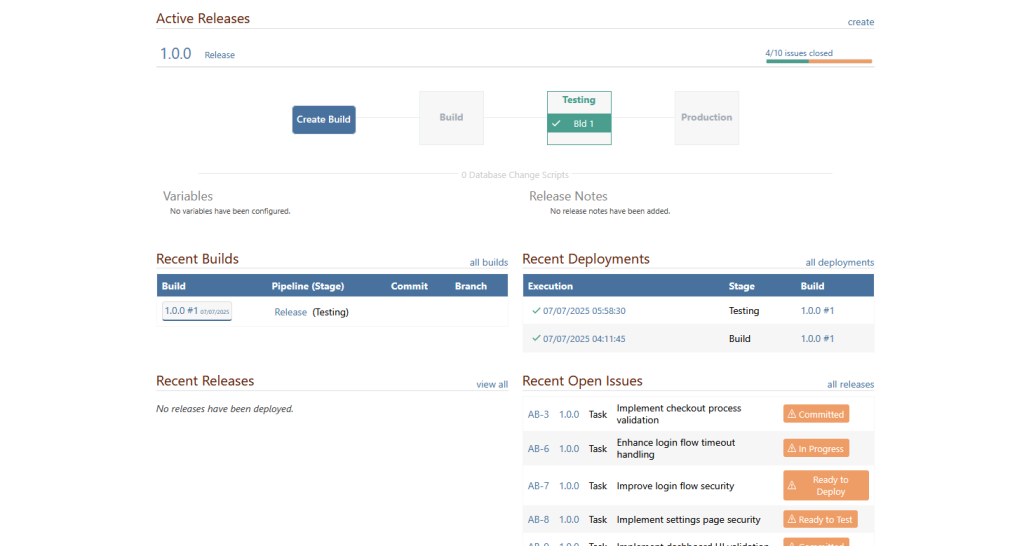
🚀 It monitors priority levels by tracking each change. Open issues are flagged and can block the release, meaning the system won’t let a release move forward until any issue tied to it is addressed. Like all other information, this is easily visible at a glance, letting you know exactly what issues are preventing the release from going out.

🚀 BuildMaster’s issue tracker visualizes your releases and tracks which changes are targeted for each one. Every change is anchored to a release, with deployment status tracked in real time. This lets teams plan deliberately, make timely decisions, and deliver predictably, keeping developers and stakeholders aligned while ensuring that important work ships on schedule.
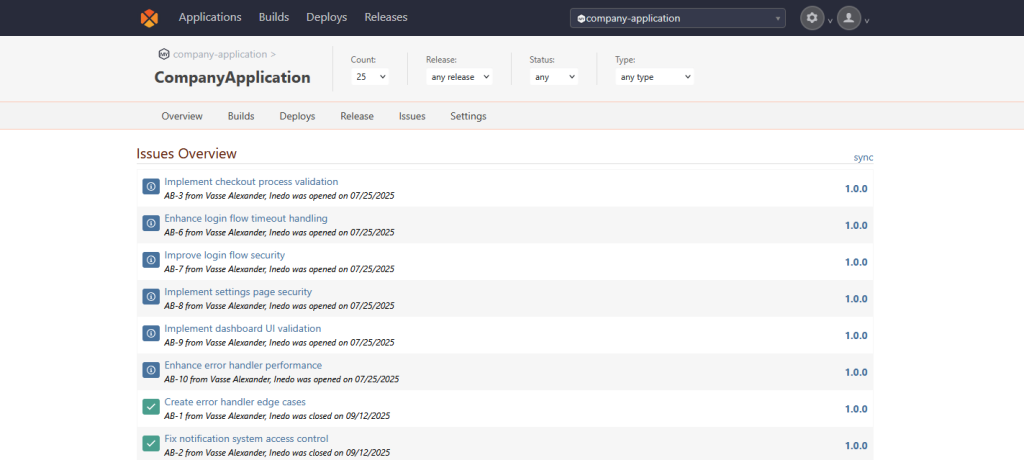
This real-time information visible through BuildMaster quickly answers the question: “What’s happening with this release right now, and what do I need to pay attention to?” You’re not just seeing builds and open issues; you’re seeing the flow of work, which items are holding things up, and whether the release is on track to ship as planned.
Using BuildMaster alongside your issue tracking tools makes a world of difference:
| Old World of Jira | New World with BuildMaster |
| Long, unprioritized backlog | Each change tied to a specific release |
| Vague priority labels | Clear, commitment-based priorities |
| Developers guessing what to work on | Developers see exactly what to focus on |
| Stakeholders unsure what will ship | Stakeholders have real-time visibility into releases |
| Manual tracking and frequent misalignment | Automated tracking keeps everyone aligned |
Without the kind of visibility achieved by following the Lean Platforms mindset, the system starts to buckle. With it, you gain the clarity and control needed to deliver software predictably.
Bringing Predictability Back to Software Delivery
Software releases are meant to deliver value. But all too often, they’re slowed down by unmanageable backlogs. Small changes get buried, priorities drift, and stakeholders are left in the dark.
By ditching the backlog and instead adopting the Lean Platforms methodology of targeting releases with clear priorities, you can ensure that changes ship predictably, and nothing falls through the cracks. BuildMaster’s real-time visibility and automation make this possible by handling the complexity of tracking shifting priorities, escalating changes, and coordinating multiple releases.
Eliminating backlogs is only one part of how organizations use Lean Platforms to improve development and delivery. To explore the full set of principles, register for our free upcoming eBook: Lean Platforms: Engineering and Orchestration. You’ll gain insight into other practices like Dual Cadence Releases, smarter Issue Tracking, and embracing Real Time Information.
Curious how it all works in practice? Let’s talk. Book a quick call with one of our experts, who bring 10+ years of experience in modernizing DevOps, strengthening package governance, and building secure, scalable pipelines. See how Lean Platforms can help you deliver faster without compromising stability.
