

Lean Platforms
Eliminate Delays and Disruptions in Software Releases
This article is part of our series on Lean Platforms, soon featuring as a chapter in our up and coming free, downloadable eBook
With 77% of organizations deploying at least once per week, frequent releases have become the norm. But they often miss deadlines or fail to meet stakeholder expectations because build statuses, test results, and dependencies are scattered across tools and teams. What’s more, frequent releases can lead to disruptions from issues like insufficient testing or misaligned dependencies, which in turn cause further delays or even business outages.
This vicious cycle makes it increasingly difficult for stakeholders to see the value in their investment. App directors and CTOs who are constantly putting out fires often get axed. The same goes for those who can’t clearly communicate project status. Meanwhile, their old companies start eyeing low/no-code solutions.
Instead of slowing down changes or accepting constant disruption, teams following a Lean Platforms methodology have a better option: maintain two separate, parallel release tracks. One for stable, predictable releases with minor, low-risk changes, and the other for higher-risk changes that could impact the codebase. It’s the best of both worlds.
In this article, we’ll look at how organizations adopting Lean Platforms can achieve this, delivering predictable releases using BuildMaster without needing a world-class, Netflix-grade platform engineering team.
Delays And Disruption: Accepting the Inevitable
To improve predictability and quality, you can try things like reducing technical debt or bringing in more development resources. But big changes always come with some level of surprise—whether it’s unclear requirements, unexpected complexity, or shifting priorities. Even the most elite teams out there don’t hit perfect, on-time releases every time. Sooner or later, those unexpected issues can lead to things like:
⚠ Delays when they’re discovered before production, causing the release date to be pushed back
⚠ Disruptions when they’re discovered after production, causing a business disruption or urgent bugfix
Even if a delay or disruption doesn’t have an immediate impact on the business, dealing with unexpected issues still creates unexpected work. And that usually means pushing lower-priority stuff from the next release even further out—which just makes future releases even harder to predict.
Stakeholders, already frustrated by missed expectations, can’t get straight answers to basic questions: When will my change go live? What even shipped last time? As trust erodes and costs climb, companies start to doubt the value of investing in their own development teams. That’s when budgets are pulled, teams get axed, and companies jump ship to no-code alternatives.
Adding Predictability to Unpredictability
Since unexpected issues are pretty much inevitable, it’s hard to say exactly when every requested change will go out. To add some predictability to releases, teams use release types like Major, Minor, and Hotfix to set clearer expectations. If your team’s already doing this, you probably know the juggling act—trying to keep releases on track while dealing with all the usual surprises.
These release types start out simple:
- Major Release: Follows the full process and delivers large, planned features.
- Hotfix Release: Only used to fix a single, high-critical issue and bypasses most processes
- Minor Release: Somewhere in between, adding small, routine enhancements.
At first, their release track will look neat, tidy, and make sense to everyone.

However, this list quickly grows as stakeholders start requesting different types of changes that don’t neatly fit into the existing processes, and you start seeing red flags:
⛔ Constant debates over whether a change is “critical” enough for a hotfix.
⛔ Teams rushing changes into Minor releases that break because of skipped testing.
⛔ Stakeholders complaining they can’t track what’s being released when.
Sound familiar? When you see these, you’re on the verge of release types spiraling. Suddenly, you’re juggling new release types to plug the gaps:
- Patch: Like a hotfix, but for non-critical issues, following most processes.
- Alpha: Like a minor release, but with rough, hidden features to enable later.
- Library Update: Triggered by a vulnerability or bug in a library.
You know you’re in a bad place when your release types go beyond Major, Minor, and Hotfix. The more types you add, the messier it gets.
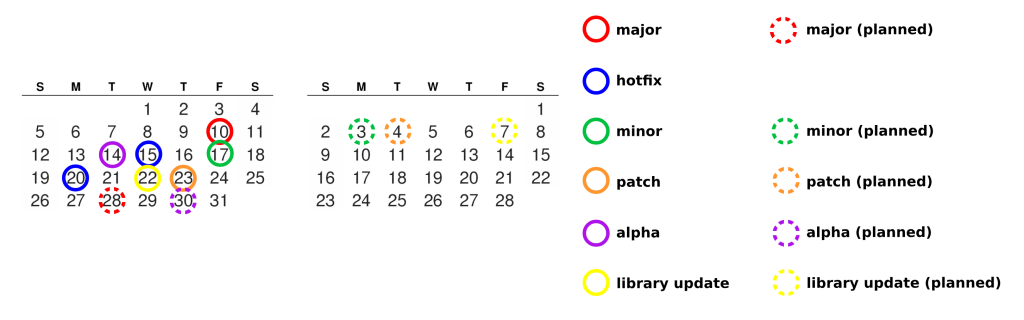
Multiply this across different apps, and stakeholders will have a hard time keeping up as delays stack, disruptions ripple, and release plans twist into something unrecognizable. Delays alone? Inevitable—no one bats an eye. But when they’re tangled with outages and constantly moving deadlines, that’s when patience snaps. That’s when execs start cutting jobs, teams lose their way, and people say, “I’m done.”
That kind of breakdown is exactly why it’s worth rethinking how releases are managed. One of the most effective ways to do that? Parallel Release Tracks.
Introducing Parallel Release Tracks
Creating two separate, parallel release tracks will make changes much easier to follow and significantly reduce the productivity drop across releases. Best of all, it will bring predictability into the inevitable delays and disruptions that come with higher-risk changes to the codebase.
An application with parallel release tracks might look like this:

The “routine” release track is just that – it’s never delayed nor disruptive. It delivers low-risk changes such as bug fixes, minor enhancements, or maintenance tasks on a consistent schedule without delays or surprises. However, it may not include riskier code changes that are more difficult to deliver on time or without problems. That’s what the other track is for.
The “major” release track is like the existing single track. Each release may follow a different process, require different testing, and ultimately have different risks – and each of these releases may cause delays or disruptions.
What counts as “low risk” versus “high risk” isn’t universal. It depends on an organization’s context and tolerance for disruption. Low-risk changes (like fixing a typo or minor style tweaks) rarely affect core systems or critical functionality. High-risk changes (such as rewriting a core service or altering functionality that affects the ability to roll back a version) can disrupt essential workflows or critical tools and are therefore targeted for the high-risk release track.
Some teams may resist parallel release tracks, arguing they’re just a rehash of major and minor releases, with terms like “alpha” or “patch” merely dressing up minor ones. But this misses the point. Like the shift from Waterfall to Agile, parallel tracks aren’t just semantics—they foster a shared mindset, aligning teams and stakeholders around adaptability.
The Routine Release Mindset
To overcome the skepticism that might come with the idea of parallel releases, start with trivial things like fixing typos that have virtually zero risk. Once teams nail a few of these releases, they can ease into slightly riskier changes. To keep routine releases smooth, stick to these rules:
⭐ Predictable Cadence: Routine releases must happen like clockwork—on a fixed schedule, whether weekly, biweekly, or monthly, always on the same day and time (with minor adjustments for holidays!). If a change misses the cut-off, it waits for the next release.
⭐ Low-Risk Only: Only low-risk, non-disruptive changes make the cut. Classifying changes this way involves subjectivity, and it’ll take time for stakeholders and teams to align on what qualifies.
Cumulative Value from Low-Risk Changes
Although there’s no real risk in fixing a typo in a help dialog, there’s also no real value. At least, not in that single, individual fix. However, fixing typos demonstrates to stakeholders and development teams alike that low-risk changes can be released quickly, easily, and on schedule. This helps everyone to think in terms of delivering value through low-risk, non-disruptive changes
For example, instead of addressing the complex race condition that leads to an occasional error when editing a record, stakeholders may simply ask for the message to change: “If you’re receiving this message, please refresh the page and apply your edit again”.
This request may inspire the development team to propose an equally trivial solution: automatically reapply the edits if there are no conflicts and try again. It’s not an elegant solution, but it would eliminate the error almost entirely. It’s a low-risk change that could effectively eliminate helpdesk tickets from this error. And if needed, the proper solution can always be addressed in a future major release.
Major Release Mindset
As low-risk changes become part of routine releases, major releases will start to feel riskier and happen less often. Just like with a single release track, each release will be a bit different, and there might be some value in creating template release processes. But after a while, most stakeholders and dev teams will forget about them, turning each major release into its own big event.
The key rule about major releases is that with any high-risk change, delays and disruptions are almost always inevitable. It will be up to stakeholders and development teams to predict and mitigate the risk as much as they feel is worth it for that particular release.
Two-track Mindset
Over time, stakeholders will start to understand that seemingly trivial, low-value changes may carry a lot of risk while major, high-value changes may have virtually none. This will help them rethink how to plan innovative, high-value changes while minimizing the risk of delays and disruptions.
Say stakeholders want to trigger automatic workflows when specific events happen. They might ask to add the “risky” stuff, like logging events into current systems, all in one big release, even if it doesn’t add much value. Then, they can schedule smaller updates, like setting up automation triggers, for regular releases. If you’re stuck in a single-track release mode, splitting up changes by value and risk across different releases just wouldn’t fly.
We know what you’re thinking, “this is going to take a whole lot of work and will be a massive headache to implement”. But that’s where BuildMaster comes in, resolving this complexity by offering visibility with real-time information for everyone involved.
Managing Release Tracks with Real-time Information
Parallel release tracks change how software gets deployed. Instead of fewer, larger releases, teams now handle more frequent, smaller changes. Developers are building new versions—often one per code tweak, especially with CI/build servers—meaning no more waiting for every feature to be ready, unlike the old single-track model.
But here’s the challenge: with so many builds (think snapshots of code changes) in motion, tracking what’s where and when it’s ready is tough. A build could be a bug fix for the routine track or a feature for the major track—manually managing them is a nightmare, even for top release managers.
This is where BuildMaster comes in; by visualizing real-time information in a centralized command center, so that no single person needs to manage all these changes, and everyone can see the current status at any time.
🚀 Pipeline Progress for Parallel Release Tracks
BuildMaster combines the progress of releases and builds as they move through the deployment pipeline. This gives both stakeholders and development teams a unified, real-time view.

Stakeholders can quickly see which changes are associated with which release, as well as any blockers preventing deployment. Development teams can just as easily see specific code changes and differences across builds and releases.
🚀 Issues & Planned Changes
With so many changes constantly shifting between releases, issue tracking becomes the single source of truth for what’s planned, what’s in progress, and what’s been released. But keeping that information accurate is a full-time job—one that involves constantly flipping statuses, updating target dates, and answering endless questions about what’s ready and what’s not.
BuildMaster automates this process by directly integrating with issue trackers. This means stakeholders can see, in real time, which changes are tied to which release. More importantly, BuildMaster can block deployments when issues haven’t been completed.
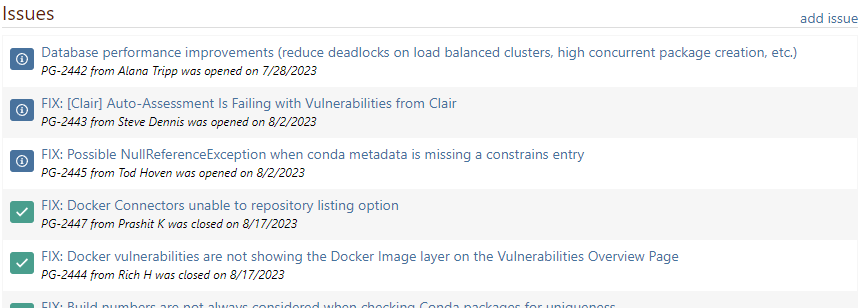
To help manage all of the status changes, BuildMaster can update issue tracking system statuses on deployment, reducing forgotten status changes and incorrect information.
🚀 Code Changes
BuildMaster also integrates with source control, which lets developers see code-level changes across releases and builds without having to jump to a different tool.

Developers can navigate through their repositories in BuildMaster and see which branches and which commits are associated with different builds.
Solve Release Issues with a Parallel Release Track
Frequent releases often lead to delays, unmet expectations, and disruptions from issues like insufficient testing or misaligned dependencies. This frustrates stakeholders, leading them to question the value of their investments. This is when investments dry up, CTOs get replaced, and companies turn to no-code alternatives.
Teams following the Lean Platforms methodology can bring order and visibility by working with two parallel release tracks. One track ensures predictable, on-time releases with low-risk changes, while the other allows for major updates that may require more flexibility. BuildMaster makes parallel release tracks possible by eliminating the complexity that comes with managing constant changes, providing visibility and real-time information for both developers and stakeholders.
Parallel release tracks are just one of the ways that organizations use Lean Platforms to improve their workflow. Learn more about other tenants of Lean Platforms, including effective Issue Tracking, Backlog Elimination, and Real Time Information Dashboards, in our free upcoming eBook, Lean Platforms: Engineering and Orchestration. Reserve your free copy now!
Want to discover how Lean Platforms allows you to roll out innovative updates to your applications while keeping stability and speed intact? Schedule a chat with one of our experts today!
